
Phone: (512) 476-2830

Hammertoe Surgery Can Improve Your Mobility and Function
About Hammertoe Correction Surgery
The development of severe hammertoe is typically the result of wearing narrow shoes that lack adequate support. Over time, it can cause exceptional pain and difficulty walking for patients. At Orthopaedic Specialists of Austin, we can relieve your discomfort and restore function by repositioning your toe, removing deformed bone tissue, or realigning your tendons through hammertoe correction surgery. As foot and ankle orthopedic specialists at our Lakeway, TX, Austin, TX, and Leander, TX, practices, Dr. Andrew Ebert will ensure you receive optimal treatment and comprehensive care.
MEET OUR SPECIALISTS

Andrew Ebert, M.D.
Physicians
What is Hammertoe?
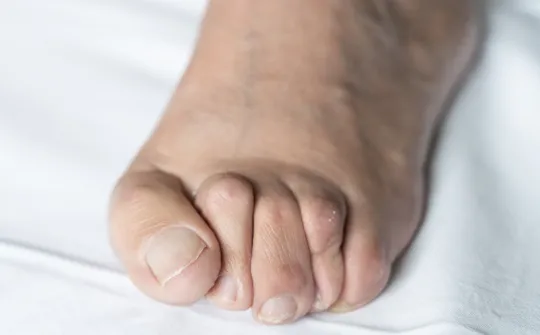
Hammertoe is an abnormality characterized by a middle joint in the second, third, or fourth toe that is curled downward instead of remaining straight, giving the appearance of a hammer. Although it is typically diagnosed in the second or third toe, it can affect any of the toes on your foot. Conservative treatments and exercises may help treat hammertoe and prevent the problem from progressing. However, for most patients, the toe will remain in a downward position and eventually require surgery.
Hammertoe Causes
Hammer toe usually develops over time from arthritis or wearing narrow shoes with inadequate arch support, such as high heels. This results in an imbalance in the surrounding muscles, tendons, or ligaments in the foot, preventing the toe from bending and straightening properly. Once the muscles weaken and the toe remains in a bent state for a prolonged amount of time, it will no longer be able to straighten on its own.

Risk Factors
Women have a greater chance of developing hammer toe, due to trendy shoes with narrow toe boxes and high heels. You may be at risk for developing this foot disorder if you are older, have diabetes, or a family history of hammer toe. Other causes may include:
Toe length
Age
Birth defect
Arthritis
Toe injury
Signs and Symptoms
Hammertoe is very apparent and easily diagnosed. Common symptoms may include:
A bent toe that looks like a hammer
Pain when moving the affected toe
Inability to straighten the affected toe
Difficulty walking
Swelling or redness on the toe
Corns, calluses, or open sores on top of the joints of the affected toe

What Our Patients Say


Types of Treatment
During your consultation, the doctor will carefully examine and maneuver the affected toe and surrounding toes, as well as order a series of x-rays to view the bone structure. In mild to moderate cases, he may initially prescribe certain non-surgical treatments, such as stretches, exercises, and orthopedic footwear to help realign the toe.
If conservative treatments are ineffective, or the condition is already severe, your doctor will recommend outpatient surgery to reposition the toe, remove the deformed bone, and realign tendons. Possible surgical procedures we provide include:
Arthroplasty
During this procedure, the doctor will remove half of your joint below the bent toe to help keep the toe straight.
Arthrodesis
During this procedure, the entire joint below the bent toe is removed and a tiny pin is inserted into the bone to keep the toe straight as it heals.
Tendon Transfer
In cases where weakened tendons below the toe are the issue, the doctor will redirect the tendons to above the toe to provide better toe support.
Basal Phalangectomy
In severe cases, your doctor will remove the bone below the base of the toe to assist with mobility.
Weil Osteotomy
During this procedure, the doctor will shorten the metatarsal bone and insert surgical pins to aid in mobility and toe function.

Quick Links
Get In Touch
Fax: (512) 476-2832
© 2026 Orthopaedic Specialists of Austin. All Rights Reserved. Accessibility Statement - Privacy Policy - Sitemap


I saw Dr Kay for my carpal tunnel symptoms and proceeded with surgery. He was very professional and thorough . The location was great; the process wasn’t stressful at all. He did a great job!! Thank you Dr Kay and staff.
Patient