
Phone: (512) 476-2830

Osteotomy
Problems with bone or joint alignment can place uneven pressure on a joint, and can cause pain, cartilage damage, and difficulty with movement. For certain patients, an osteotomy can improve alignment, redistribute pressure across the joint, and help preserve healthy tissue.
An osteotomy may be recommended for certain joint alignment problems, arthritis, bone deformities, or other conditions affecting how a joint moves and functions.
What Is an Osteotomy?
An osteotomy is a surgical procedure in which an orthopedic surgeon carefully cuts and repositions a bone to improve its alignment. Depending on the condition being treated, the surgeon may remove a small wedge of bone, create an opening in the bone, or rotate the bone into a better position. Plates, screws, or other fixation devices may be used to hold the bone in place while it heals.
Correcting the alignment can change how weight and pressure are distributed across the joint, helping relieve stress on damaged areas and improve joint function.
What Conditions Can an Osteotomy Treat?
An osteotomy may be used to treat a variety of orthopedic conditions, including:
Joint alignment problems – abnormal alignment can place too much pressure on one part of a joint, leading to early wear, injury, or instability.
Knee arthritis – in certain patients with arthritis affecting primarily one side of the knee, an osteotomy can shift weight away from the damaged area and toward healthier cartilage.
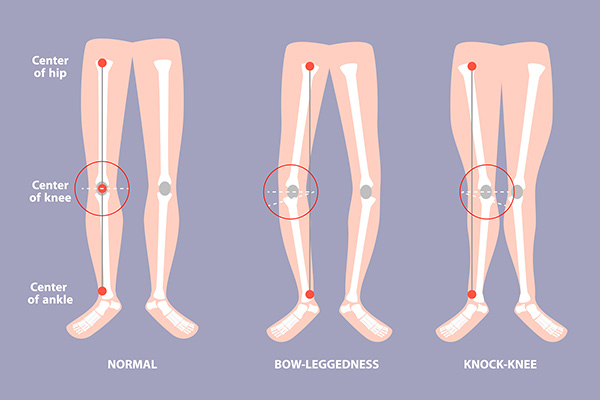
Bowlegged or knock kneed – an osteotomy may be used to correct the overall alignment of the leg and improve how forces are distributed through the knee.
Patellar instability or malalignment – certain types of osteotomies can help improve the position and tracking of the kneecap.
Hip alignment conditions – an osteotomy may be used to reposition how the femur sits in the pelvis in patients with certain structural hip conditions, including some forms of hip dysplasia, impingement, and instability.
Bone deformities – an osteotomy can correct certain differences in the angle or rotation of a bone that affect joint motion or function
The type of osteotomy recommended depends on the location and cause of the problem.
Types of Osteotomies
There are several types of osteotomies performed.
Some of the more common ones include:
High Tibial Osteotomy (HTO) - This procedure involves the upper portion of the tibia, or shinbone, and is often used to treat knee arthritis associated with abnormal alignment or ligament instability. The procedure redistributes pressure away from the damaged portion of the knee.
Distal Femoral Osteotomy (DFO) - This procedure realigns the lower portion of the femur, or thighbone, near the knee. It may be recommended for certain patients with knock-knee alignment, instability, or arthritis.
Derotational Osteotomy - A derotational osteotomy involves changing the rotation of the femur or tibia to improve the alignment of the joints involving that bone. This may be recommended for certain patients with hip or knee instability, in-toeing, out-toeing, or dysplasia. Different procedures may be used depending on the specific structural problem.
Tibial Tubercle Osteotomy (TTO) - This procedure repositions a small portion of the upper tibia where the patellar tendon attaches. It may be used for certain patients with kneecap instability, malalignment, or cartilage problems.
When Is an Osteotomy Recommended?
An osteotomy is not appropriate for every patient with joint pain or arthritis. It is often considered when a structural or alignment problem is contributing to pain or joint damage.
Your orthopedic surgeon will evaluate factors such as:
Your symptoms and activity level
The location and extent of joint damage
The alignment of your bones and joints
Your age and overall health
Previous injuries or surgeries
Whether nonsurgical treatments have provided relief
For some patients, particularly those with damage limited to one area of the knee, an osteotomy can be a joint-preserving alternative that may delay or prevent the need for joint replacement.
What Happens During an Osteotomy?
The exact procedure depends on which bone needs to be corrected and the amount of correction required.
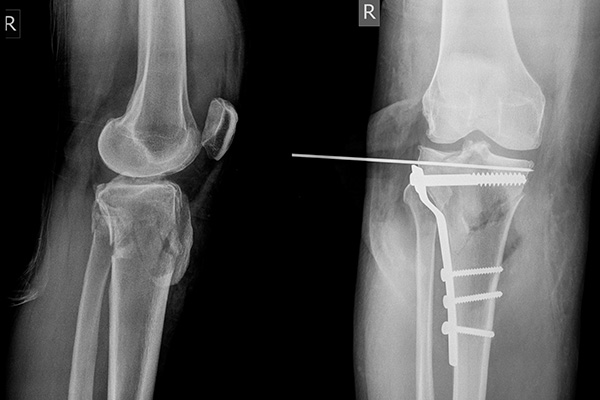
The surgeon makes a carefully planned cut in the bone and adjusts it to the desired position. Depending on the procedure, a small wedge of bone may be removed or an opening may be created to achieve the proper alignment. The bone is then secured in its new position while it heals, commonly with plates, screws, or rods.
The surgeon will explain the specific technique recommended for your condition before surgery.
Recovery After an Osteotomy
Recovery after an osteotomy varies depending on the type of procedure performed and the patient's individual condition. Because the bone must heal in its new position, recovery is typically a gradual process.
Patients may need crutches and have restrictions on how much weight they can place on the affected leg during the early stages of recovery. Physical therapy is often used to help restore movement, strength, and function as healing progresses.
The surgeon will monitor bone healing and determine when it is safe to gradually increase weight-bearing, exercise, and other activities.
What Our Patients Say


Quick Links
Get In Touch
Fax: (512) 476-2832
© 2026 Orthopaedic Specialists of Austin. All Rights Reserved. Accessibility Statement - Privacy Policy - Sitemap

I saw Dr Kay for my carpal tunnel symptoms and proceeded with surgery. He was very professional and thorough . The location was great; the process wasn’t stressful at all. He did a great job!! Thank you Dr Kay and staff.
Patient