
Phone: (512) 476-2830

Tommy John (UCL Reconstruction)
Injuries to the ulnar collateral ligament (UCL) of the elbow are common in athletes who repeatedly throw or pitch. An injured UCL can cause pain, decreased throwing velocity and control, and difficulty returning to the same level of sport or activity.
When a UCL injury does not improve with nonsurgical treatment, surgery may be recommended to restore stability to the elbow and help patients return to their desired level of athletic ability.

What Is Tommy John Surgery?
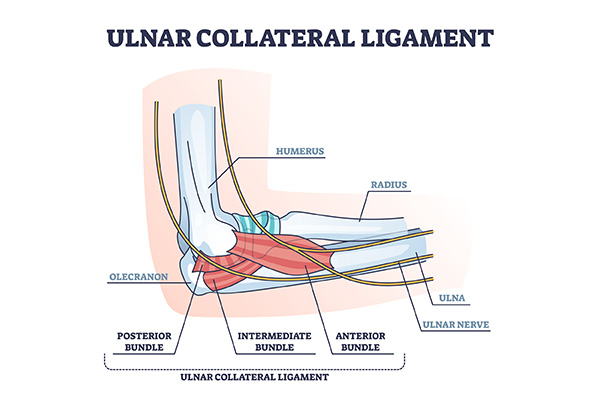
Tommy John surgery, also known as ulnar collateral ligament (UCL) reconstruction, is a procedure used to replace an injured or torn UCL in the elbow. The UCL is an important ligament on the inside of the elbow that helps keep the joint stable, particularly during throwing and pitching.
The procedure is named after Tommy John, a Major League Baseball pitcher who underwent the groundbreaking surgery in 1974 after tearing his UCL in his pitching elbow. The surgery was performed by orthopedic surgeon Dr. Frank Jobe, and allowed John to return to professional baseball at the highest level. The success of Tommy John’s surgery led to the procedure becoming widely known as Tommy John surgery.
During UCL reconstruction, the injured ligament is replaced with a tendon graft. The tendon graft used usually comes from a different tendon in the patient’s wrist (palmaris) or knee (hamstring) which has been shown to have no negative effect on athletic performance when used as a UCL reconstruction graft. The surgeon positions and secures the graft in order to recreate the function of the injured UCL.
What Causes a UCL Injury?
UCL injuries most often develop from repetitive stress on the inside of the elbow. They are particularly associated with sports that involve frequent throwing or overhead motion.
Athletes who may be at increased risk include:
Baseball players (especially pitchers)
Softball players
Javelin throwers
Football quarterbacks
Gymnasts
Other athletes who repeatedly place stress on the elbow
A UCL can also be injured suddenly, although many injuries develop gradually from repeated stress over time.

What Are the Symptoms of a UCL Injury?
Symptoms can vary depending on the severity of the injury.
Common signs may include:
Pain along the inside of the elbow
Pain during throwing or overhead activity
Decreased throwing speed or control
A feeling of weakness or instability in the elbow
A sudden popping sensation at the time of injury
Difficulty performing at the same athletic level as before the injury
Some patients may have little or no discomfort during normal daily activities but experience symptoms when throwing or participating in their sport.

How Is a UCL Injury Diagnosed?
Your orthopedic specialist will ask about your symptoms, activities/sports, and how the injury occurred. A physical examination can help evaluate elbow stability, range of motion, and areas of tenderness.
X-rays are often used to evaluate overall alignment of the bones of the elbow, and an MRI provides a more detailed look at the UCL and other soft tissues. Additional imaging may be recommended depending on the injury.
When Is Tommy John Surgery Recommended?
Not every UCL injury requires surgery. Initial treatment may include:
Rest and activity modification
Anti-inflammatory medications
Injections
Physical therapy
A progressive throwing program or return to sport protocol
Surgery may be considered when the ligament is significantly injured and symptoms continue despite nonsurgical treatment, particularly for athletes who want to return to competitive throwing sports or overhead activities.
The decision to have surgery depends on the extent of the injury as well as the patient's age, activity level, athletic goals, and overall elbow health.
What Happens During Tommy John Surgery?
During a UCL reconstruction, the surgeon removes or repairs the damaged portion of the ligament and creates a new ligament using a tendon graft. The graft is passed through carefully positioned areas of the bones around the elbow and secured in place to provide stability. The specific surgical technique may vary depending on the injury and the individual patient.
In some cases, a UCL injury may be treated surgically with a UCL repair and internal brace rather than a reconstruction. Repair preserves the patient's existing ligament and reinforces it with an internal brace, which may be an option for certain types of tears. Your orthopedic surgeon will determine which procedure is most appropriate based on the location and severity of the injury.
The ulnar nerve, commonly known as the “funny bone” nerve where it crosses the elbow, is often pinched or stretched when the UCL is injured since it runs right next to the UCL at the elbow. This may lead to numbness, tingling, or a pins-and-needles feeling in the ring and pinky fingers. To treat these symptoms and to protect the nerve during UCL reconstruction or repair, the ulnar nerve is commonly moved during surgery and secured in place above the UCL. This addresses any nerve symptoms from the UCL injury, protects the ulnar nerve during surgery, and helps prevent cubital tunnel syndrome later in life.
Recovery After Tommy John Surgery
Recovery after UCL reconstruction is a gradual process. The elbow is initially protected while the graft begins to heal, followed by a structured rehabilitation program to restore motion and strength.
For throwing athletes, rehabilitation eventually progresses to a supervised throwing program. Returning to competitive throwing takes time and varies based on the individual athlete, position played, progress during rehabilitation, and other factors.
Your orthopedic surgeon and physical therapist will guide each stage of recovery and determine when it is safe to advance activity.

Quick Links
Get In Touch
Fax: (512) 476-2832
© 2026 Orthopaedic Specialists of Austin. All Rights Reserved. Accessibility Statement - Privacy Policy - Sitemap